Prof. P. J. Guruprasad — Department of Aerospace Engineering, IIT Bombay
Computational mechanics, composite structures, discrete dislocation dynamics and structural health monitoring.
Professor, Department of Aerospace Engineering, Indian Institute of Technology Bombay.
My research group works in the broad area of mechanics of materials, with emphasis on developing efficient, physics-based computational tools to understand the deformation and failure of metals, metallic alloys and composites over multiple length scales. Applications include aerospace and automobile structures, nuclear power equipment, and micro-scale systems such as MEMS and NEMS.
The group places strong emphasis on in-house development of computational frameworks and on integrating new physics and numerical strategies into structural analysis and multiscale modelling. I also serve as the Faculty Mentor of the IIT Bombay Mars Rover Team (MRT), guiding rover mobility, structural design and mission-readiness for international competitions.
Mechanics of materials · Composite structures · Thin-walled beams · Discrete dislocation dynamics · Multiscale modelling · Fatigue & damage · Structural health monitoring
Google Scholar Profile
Our research integrates physics-based modelling, computational mechanics, multiscale simulation and structural analysis to understand deformation and failure across materials, structures and length scales.
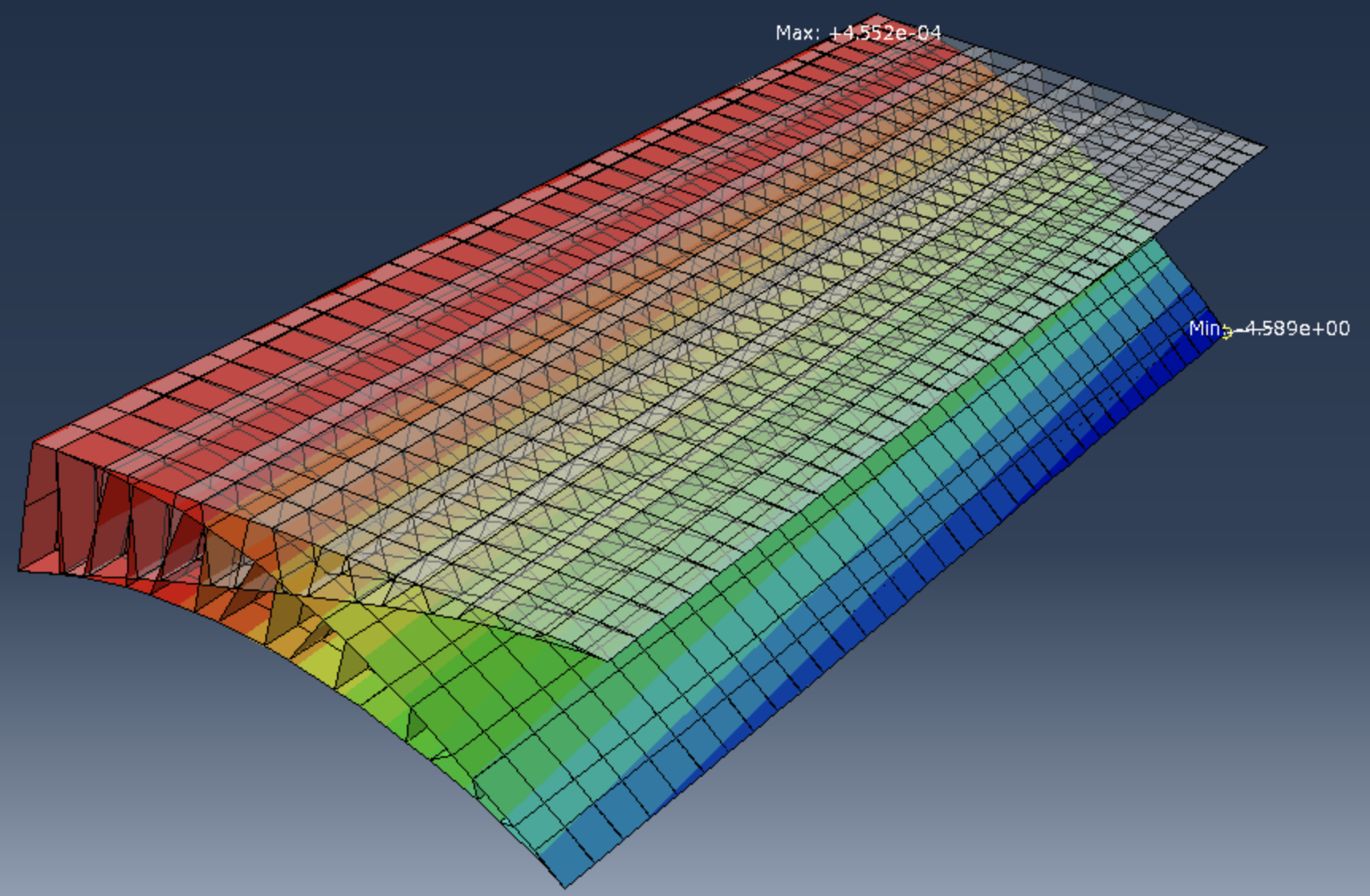
Work in this area focuses on shape memory polymer composite (SMPC) based corrugated morphing flaps for airfoils and wings. Equivalent plate models are employed to homogenize the corrugated regions, enabling rapid evaluation of design variables including ply orientation, corrugation geometry, and stiffness tailoring strategies. These morphing structures target low chordwise stiffness for smooth deformation and sufficient spanwise stiffness for load-carrying capability.
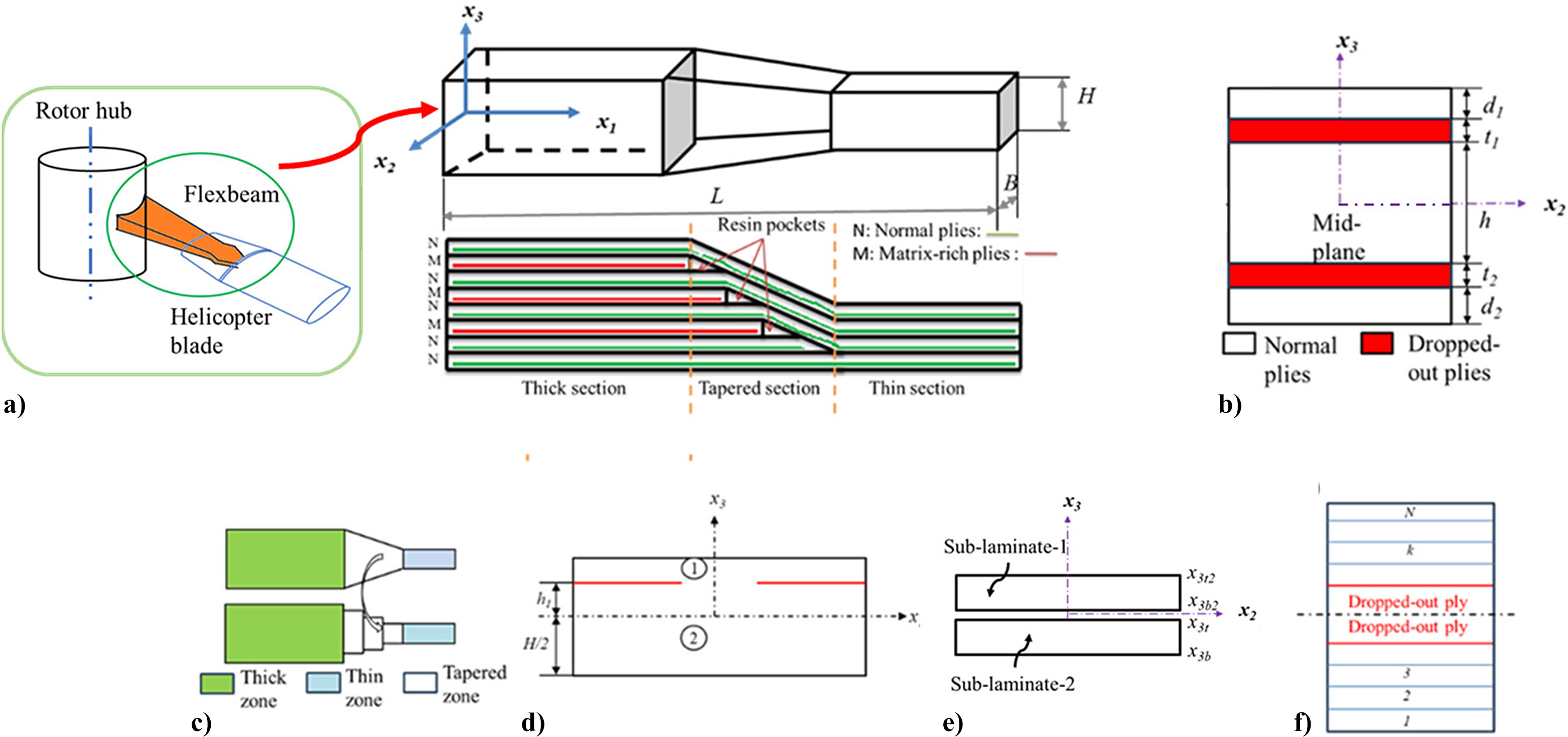
This research examines the dynamic behaviour of tapered composite flexbeam-like structures used in helicopter rotor systems. Using Variational Asymptotic Method (VAM) based cross-section modelling combined with reduced 1D beam elements, the framework incorporates delamination, ply drops, tapering, and stochastic uncertainty to study their combined influence on natural frequencies and mode shapes.
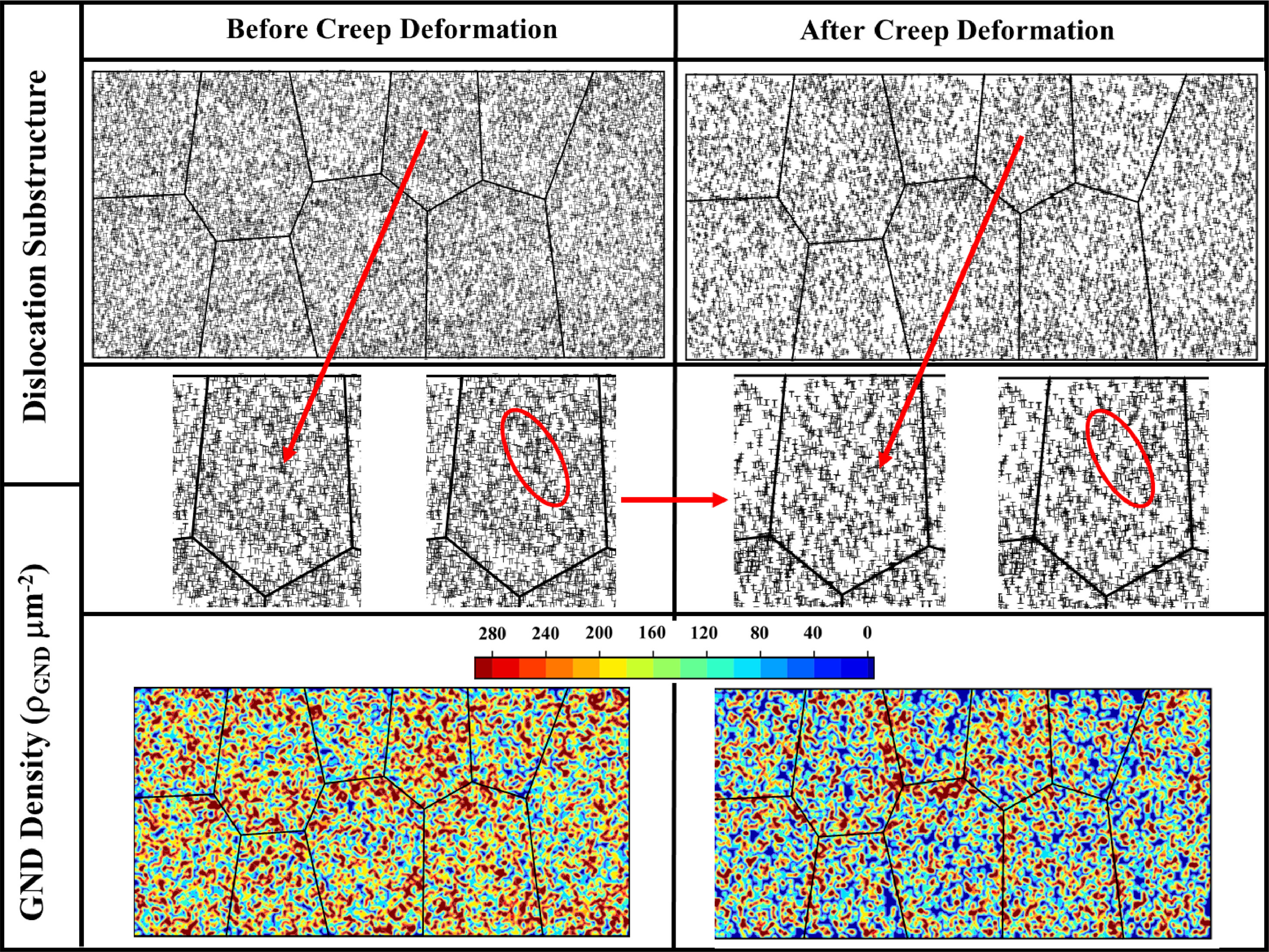
The DDD framework models the role of dislocation motion on plastic deformation and creep in polycrystals. By explicitly tracking dislocation segments, junction formation, climb, and interactions with grain boundaries, this approach provides mechanistic insight into high-temperature deformation behaviour. Recent work develops 2D-DDD models that bridge dislocation activity with macroscopic constitutive response.
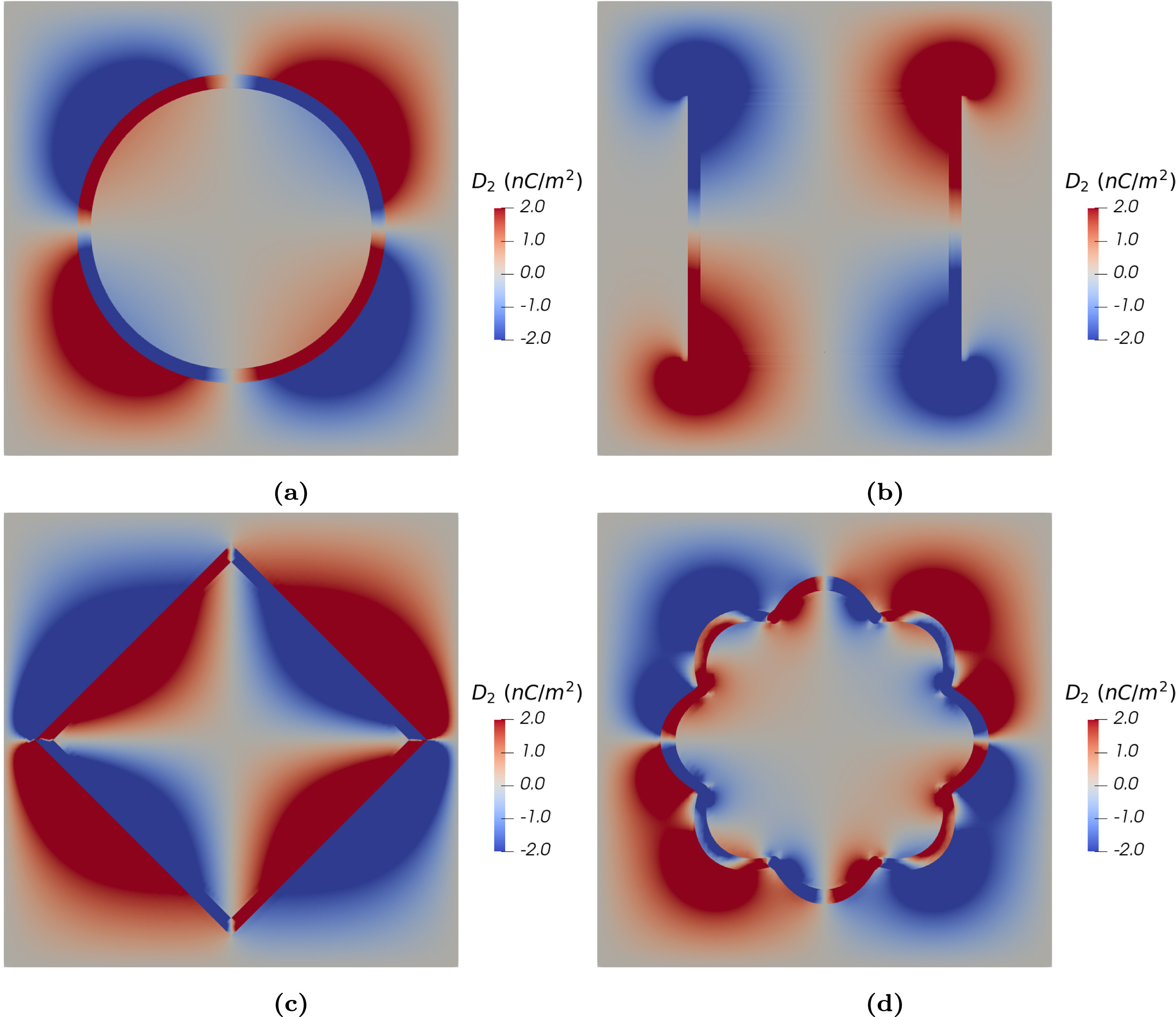
Using the Structural Genome and variational asymptotic approaches, our group determines the effective properties of architected materials including auxetic lattices, three-phase composites, and structures with imperfect interfaces. Applications include piezoelectric composites, thermal interface problems, and auxetic geometries undergoing damage evolution.
A complete and regularly updated list of publications is available on the IIT Bombay website. Below is a brief selection of recent journal papers from our group.
I regularly teach foundational and advanced courses in mechanics and data analysis in the Department of Aerospace Engineering.
Students with a strong academic record and a solid background in programming (e.g. FORTRAN, C/C++) are encouraged to apply to the M.Tech. or Ph.D. programs in Aerospace Engineering at IIT Bombay and explore research opportunities in my group.
Admission details and application procedures are available through the IIT Bombay admissions portal.
Prospective students may also email a brief CV to discuss alignment with ongoing projects.
IIT Bombay offers a structured research internship program for students with excellent academic credentials and a keen interest in research. Interns typically work on ongoing projects in various labs across the institute.
I also mentor the IIT Bombay Mars Rover Team (MRT), a student-led team that designs and builds advanced planetary exploration rovers for international competitions such as URC, ERC and IRC.
More details on internships are available through official IITB channels, and information on MRT is available at iitbmartian.github.io.