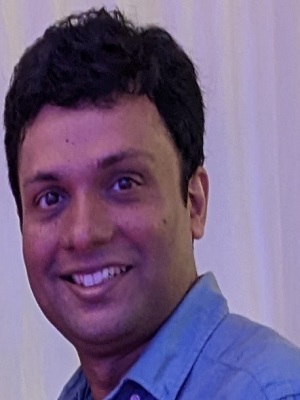
Prof. P. J. Guruprasad
My research group works in the broad area of mechanics of materials, with a focus on developing efficient and accurate computational tools to understand the deformation and failure of metals, metallic alloys, and composites across length scales.
- Computational mechanics of composite structures and thin-walled beams
- Multiscale modelling and discrete dislocation dynamics of crystalline materials
- Damage mechanics, fatigue and structural health monitoring
- Student mentoring and technical leadership through the IITB Mars Rover Team (MRT)
Academic Profile
Positions Held
- Professor, Aerospace Engineering, IIT Bombay (2022–present)
- Associate Professor, Aerospace Engineering, IIT Bombay (2017–2022)
- Assistant Professor, Aerospace Engineering, IIT Bombay (2011–2017)
- Postdoctoral Researcher, Centre des Matériaux, Mines ParisTech, France (2010–2011)
Short Biography
My research lies in the broad area of mechanics of materials, with a focus on developing efficient and accurate computational tools to understand the deformation and failure of metals, metallic alloys, and composites. Applications span aerospace and automobile structural components, nuclear power reactor equipment, and micro-scale systems such as MEMS and NEMS.
The group places particular emphasis on in-house development of computational tools, and on integrating new physics and numerical strategies into structural analysis and multiscale modelling. I am also the Faculty Mentor of the IIT Bombay Mars Rover Team (MRT), where I guide the team’s technical development in rover mobility, structural design, analysis, and mission-readiness for global competitions such as URC, ERC, and IRC.
Education
- Ph.D., Aerospace Engineering, Texas A&M University, USA (2005–2010)
- M.S., Aerospace Engineering, Indian Institute of Science, Bangalore (2002–2005)
- B.E., Mechanical Engineering, B.M.S. College of Engineering, Bangalore (1998–2002)
Honours & Awards
- Young Faculty Award, IIT Bombay (2011)
- Top 25 Hottest Articles – Journal of the Mechanics and Physics of Solids and Acta Materialia listings
- Travel award, US National Congress on Computational Mechanics (2009)
- First prize, Materials Science Division, 12th Annual Student Research Week, Texas A&M University (2009)
- Scholarship, Ministry of Human Resource Development, Government of India (M.S. program)
Research
The group’s research spans advanced composite and morphing structures, rotorcraft flexbeam dynamics, and multiscale modelling of high-temperature deformation in metallic systems. We combine variational asymptotic and homogenization frameworks, reduced-order beam and plate models, and discrete dislocation dynamics to connect microstructure, mechanics and structural response across scales.
Shape Memory Polymer Composites & Morphing Wing Flaps
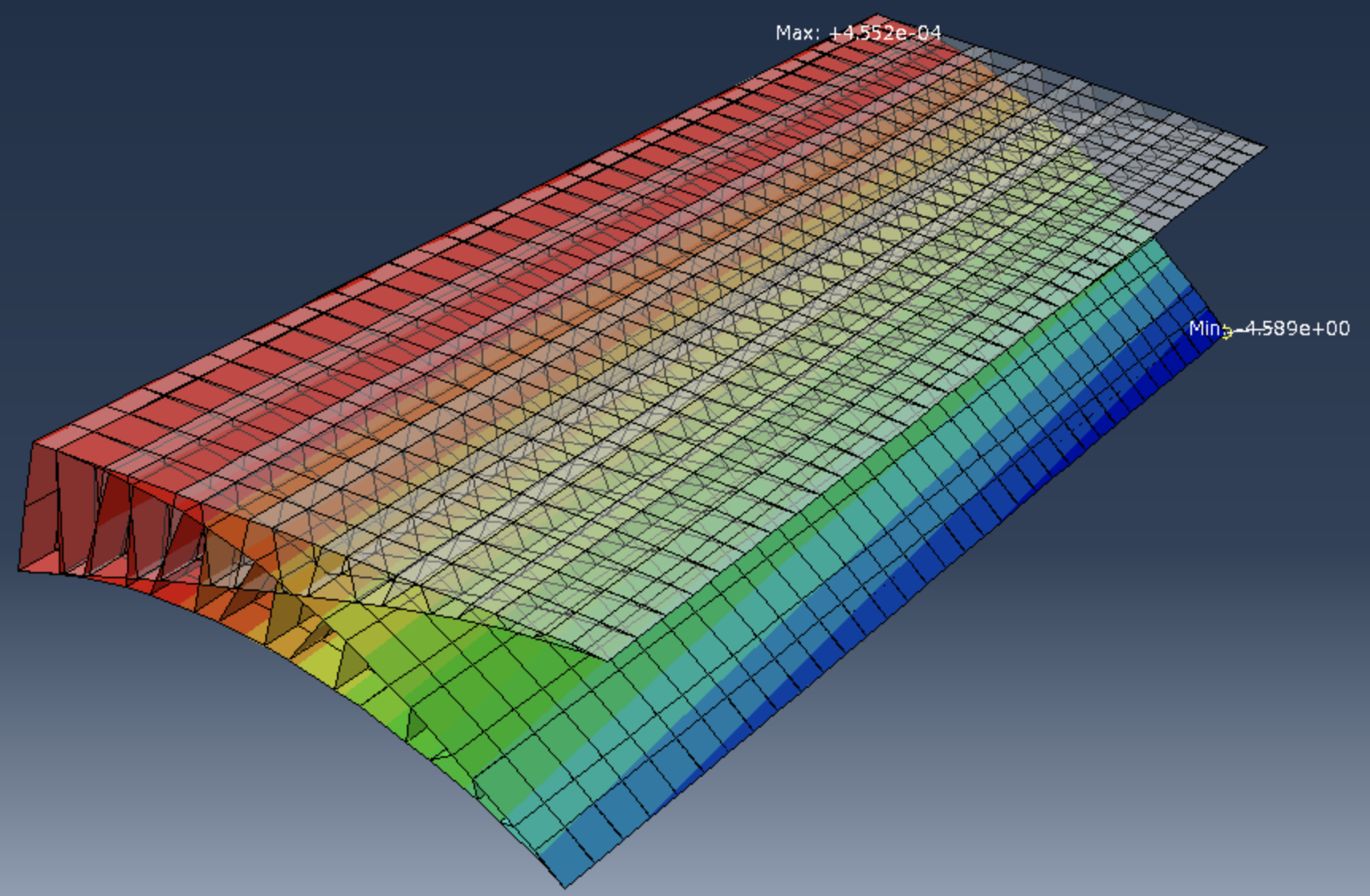
We develop multi-objective optimization frameworks for morphing aircraft trailing sections made of shape memory polymer composites (SMPCs) with variable-height corrugated geometries. Recent work considers SMPC-based corrugated trailing flaps attached smoothly to NACA 6-series airfoils and optimizes ply orientations, number of plies, and number of corrugation elements using a genetic algorithm.
The optimization targets low flexural stiffness in the chord direction (for morphing) and sufficiently high stiffness in the span direction (to withstand aerodynamic loads), while constraining trailing-edge deflections under a representative maximum air pressure. An equivalent plate formulation homogenizes the corrugated region into an orthotropic plate with the same deformation under load, making design optimization computationally efficient.
Stochastic Dynamics of Delaminated Flexbeam-Like Structures
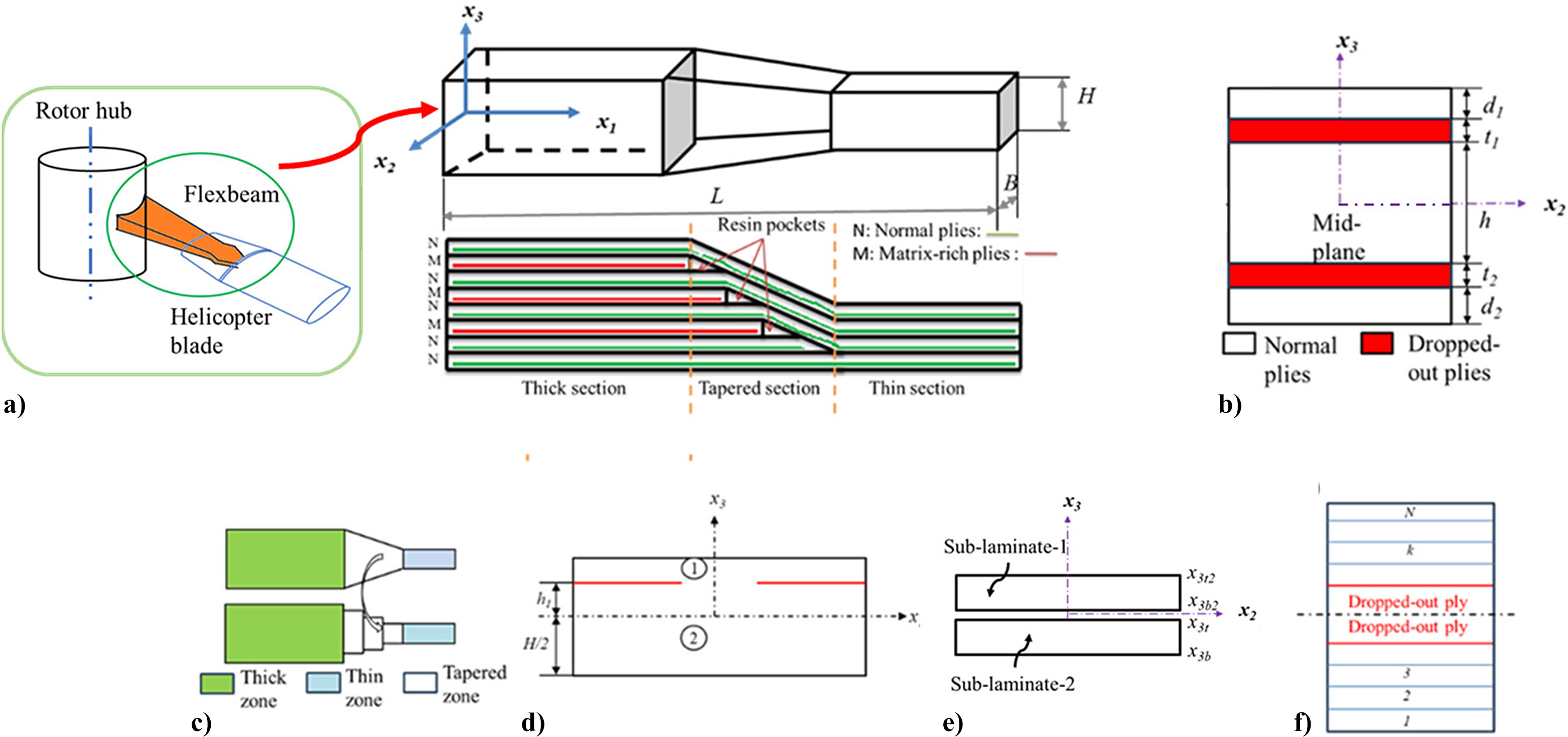
Another line of work focuses on thickness-tapered, flexbeam-like composite structures used in helicopter main and tail rotor blades. Tapering is introduced via ply terminations, which act as potential delamination sites and significantly influence the dynamic behaviour.
A generalized five-layer model for tapered cross-sections is formulated within the Variational Asymptotic Method (VAM) and coupled with a reduced 1D finite element beam model. Delamination and uncertainties in material properties at different scales are incorporated to study their combined effect on the free vibration characteristics of flexbeam-like structures.
Discrete Dislocation Dynamics & Creep in Polycrystals
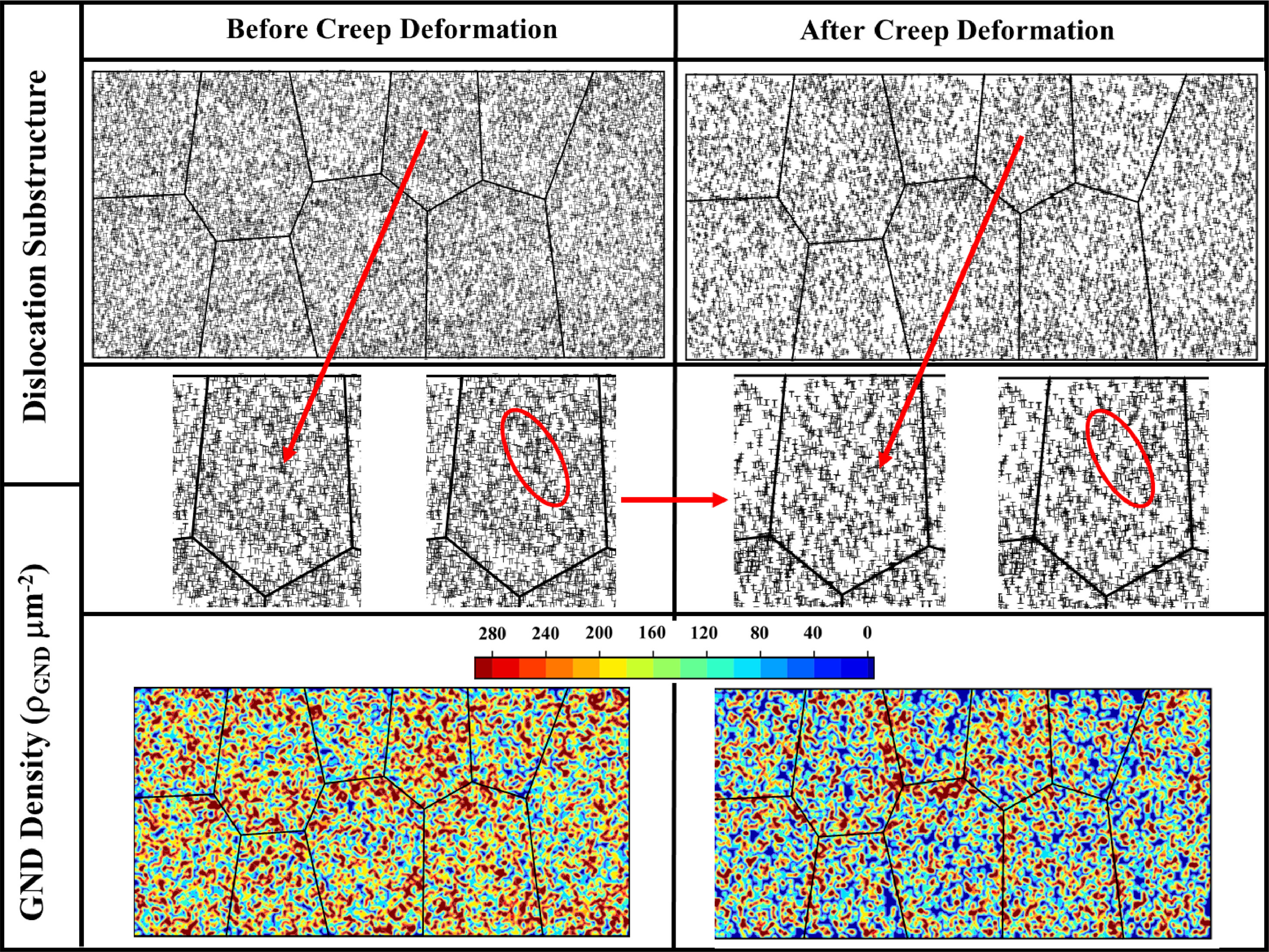
At the mesoscale, we develop discrete dislocation dynamics (DDD) frameworks to understand high-temperature dislocation creep in polycrystalline metals. Building on earlier single-crystal models that couple dislocation glide and climb with vacancy diffusion, our recent work extends the framework to polycrystalline ensembles with realistic grain morphologies.
Virtual creep experiments on polycrystalline aluminium are used to study the dependence of steady-state creep rate on applied stress, temperature and grain size. The simulations reveal Arrhenius-type temperature dependence and power-law scaling with stress, and clarify the role of grain size through the competition between dislocation interactions with grain boundaries and static obstacles.
Composite Homogenization & Auxetic Materials
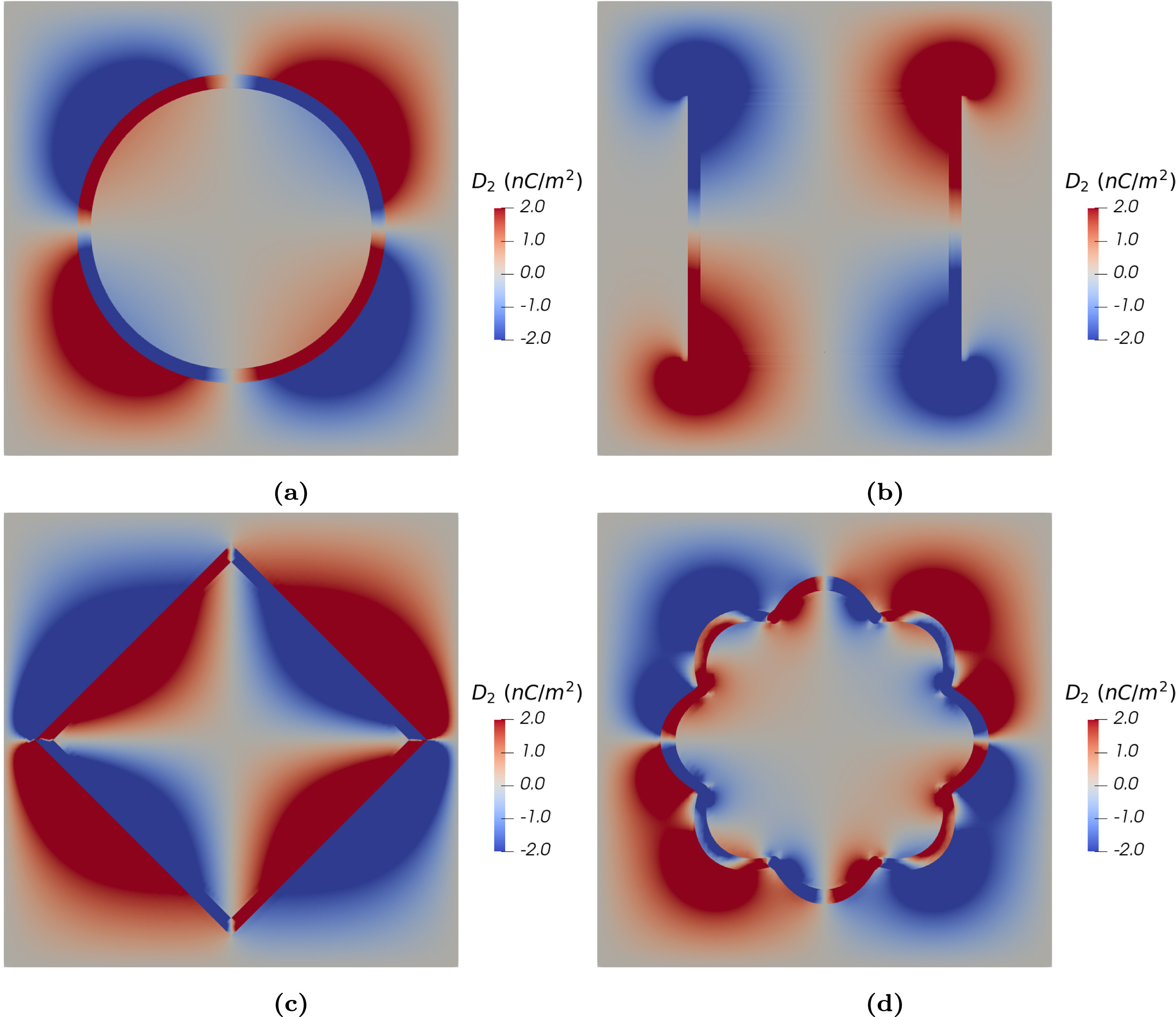
The group also works on homogenization and stochastic analysis of multi-phase composites and architected materials. The Structural Genome approach and variational asymptotic method are used to determine effective elastic and thermal properties of complex composites, including auxetic and three-phase piezoelectric materials.
Recent efforts include VAM-based homogenization of auxetic re-entrant geometries, three-phase piezoelectric composites under uncertainty, and composites with imperfect interfaces, together with reduced-order beam and plate models for structural analysis.
Teaching
Courses Taught
- AE 715 / AE 433
Vibrations and Structural Dynamics - AE 639
Continuum Mechanics - AE 102
Data Analysis and Interpretation
AE 715 / AE 433: Vibrations and Structural Dynamics
Single- and multi-degree-of-freedom vibration, damping, forced response, modal analysis, vibration of beams and other one-dimensional structures, and elements of analytical dynamics including Hamilton’s principle and Lagrange’s equations.
AE 639: Continuum Mechanics
Foundations of continuum mechanics including kinematics, conservation laws, balance principles, constitutive relations for solids and fluids, and classical boundary value problems in solid and fluid mechanics.
AE 102: Data Analysis and Interpretation
Introductory statistics and probability, graphical and numerical methods for data analysis, sampling and inference, confidence intervals, hypothesis testing, and simple linear regression with applications relevant to engineering.
Selected Recent Publications
A complete, regularly updated list of journal and conference publications is available in the Publications section. Below is a brief selection of recent journal articles.
For Prospective Students
Joining the Group
Students with a strong academic record in B.E./B.Tech or higher degrees and a solid background in programming (e.g. FORTRAN, C/C++) are encouraged to apply to the M.Tech. or Ph.D. programs in the Department of Aerospace Engineering at IIT Bombay.
Admission details and application procedures are available through the IIT Bombay admissions portal. You may also email your curriculum vitae to discuss potential alignment with ongoing research projects.
Research Internship at IIT Bombay
IIT Bombay offers a research internship program for students (B.E./B.Tech./M.Tech./M.E) with excellent academic background and interest in research. Interns work on ongoing projects in various labs across the institute.
More information on eligibility, application process and timelines can be found in the institute’s Fellowships and Internships section. Only applications forwarded through the official IITB internship program are considered for selection.
IIT Bombay Mars Rover Team (MRT) — Faculty Mentor
The IIT Bombay Mars Rover Team (MRT) is a student-led initiative focused on designing and building advanced rovers capable of extraterrestrial exploration. The rovers are equipped for autonomous traversal, on-board testing and tackling realistic mission challenges in analogue Mars environments.
MRT participates regularly in premier international competitions such as the University Rover Challenge (URC) at the Mars Desert Research Station in Utah, the International Rover Challenge (IRC) and the European Rover Challenge (ERC), and has consistently been among the top-performing Indian teams.
The team brings together students from multiple departments at IIT Bombay who work across mechanical, electrical, software, and media sub-teams to build robust, all-terrain rovers for planetary exploration and related terrestrial applications. More information is available on the official website: https://iitbmartian.github.io/ .
Contact
Mailing Address
Prof. P. J. Guruprasad
Department of Aerospace Engineering
Indian Institute of Technology Bombay
Powai, Mumbai 400076, India
Phone: +91 (0)22 2576 7142
Fax: +91 (0)22 2572 2602
Email: pjguru@aero.iitb.ac.in
Students and visitors are requested to email in advance to fix an appointment before visiting my office.
Getting to IIT Bombay
IIT Bombay is located in Powai in the north-eastern part of Mumbai. The campus is accessible by public transport (BEST buses, autorickshaws, taxis) from nearby railway stations on both the Central and Western suburban lines.
Nearest Central Railway stations: Kanjur Marg, Vikhroli, Ghatkopar. Nearest Western Railway stations: Andheri, Bandra, Goregaon, Malad.